
- Home
- Products
- Automatic Reel Tape Connector
- Automatic Cleaning Machine
- Solder Paste Cabinet
- Inspection Equipment
- PCBA Testing Equipment
- SMT Peripheral Equipment
- Automatic Dispensing Machine
- SMD Storage and Management
- Coating Machine
- PCB Handling Equipment
- Pick and Place Machine
- SMT Printer
- Automated Optical Inspection
- Soldering Equipment
- About Us
- Service
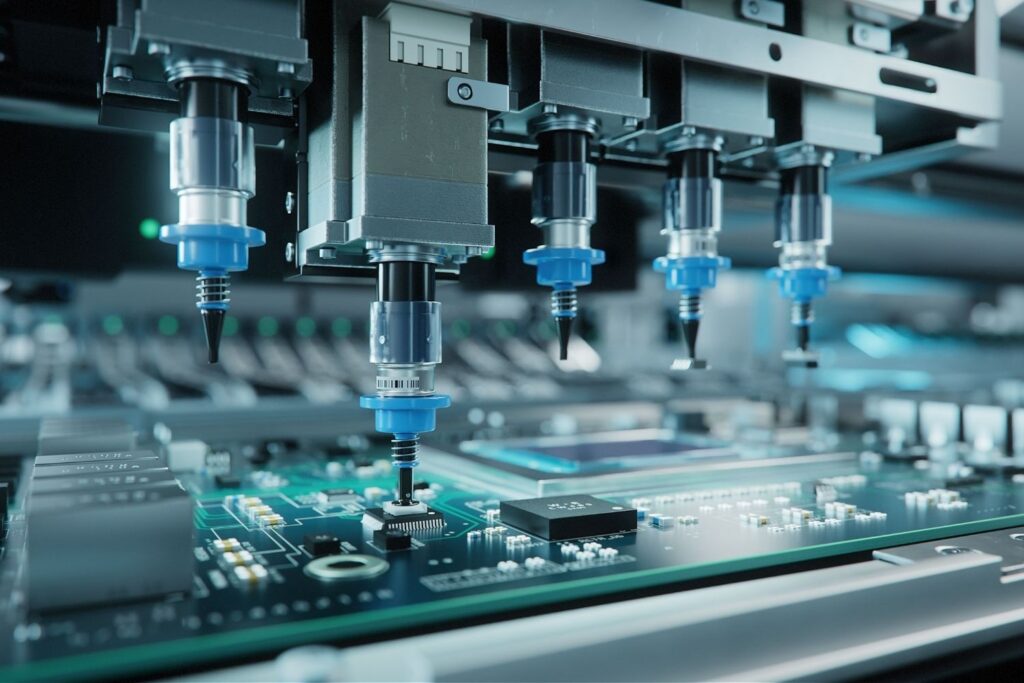
Why SMT Intelligent Splicing Machines Are a Game-Changer
Why SMT Intelligent Splicing Machines Are a Game-Changer
1. Less Downtime – Splice in 8–10 seconds with >97% success rate. Keep pick-and-place machines running non-stop.
2. Higher Accuracy – Vision-based alignment ensures ±0.1–0.2 mm precision, reducing pick-up errors and defects.
3. Error Proofing – Barcode/LCR verification prevents wrong material loading. Seamless MES integration enables full traceability.
4. Lower Labor Cost – Easy to operate (<10 min training). One operator can manage multiple lines.
5. Material Savings – Precise cutting reduces carrier tape waste to <0.5%.
6. Data Ready for Industry 4.0 – Records splicing time, operator ID, and material batch for audit and optimization.
Bottom Line: Intelligent splicing turns a bottleneck into a competitive edge—faster changeovers, fewer defects, lower cost.
Why SMT Intelligent Splicing Machines Are a Game-Changer for PCB Assembly Lines
In the fast-paced world of electronics manufacturing, Surface Mount Technology (SMT) production lines are under constant pressure to improve efficiency, reduce downtime, and maintain flawless quality. One of the often-overlooked bottlenecks in this process is manual material splicing—the practice of joining the end of one component reel to the beginning of the next.
Enter the SMT Intelligent Splicing Machine. By automating and digitizing this critical step, smart splicing machines are transforming how modern factories manage material changeovers. Below are the key advantages driving their rapid adoption across automotive, consumer electronics, and EMS industries.
Why SMT Intelligent Splicing Machines Are a Game-Changer for PCB Assembly Lines
1. Dramatically Reduced Downtime & Non-Stop Production
Traditional manual splicing often requires line slowdowns or temporary stops, leading to lost minutes that add up to hours over a production cycle. Intelligent splicing machines enable fast, precise, and consistent splicing—often completing a joint in 8–10 seconds with a success rate above 97–99%.
Many models support pre-staging and near non-stop refueling, minimizing feeder idle time and keeping pick-and-place machines running at optimal speed.
2. Higher Splicing Accuracy & Process Consistency
Manual splicing is prone to misalignment, weak joints, and tape damage—common causes of pick-up errors and placement defects. Smart splicing machines use vision recognition systems to:
- Automatically detect empty pockets and component pitch
- Precisely calibrate cutting and joining positions
- Ensure ±0.1–0.2 mm splicing accuracy
This consistency significantly improves First Pass Yield (FPY) and reduces component loss during high-speed feeding.
3. Built-In Error Proofing & MES Integration
One of the biggest risks in SMT lines is wrong material loading. Intelligent splicing machines often come with:
- Barcode/QR code scanning to verify component reels against work orders
- Optional LCR or silkscreen verification to prevent mixing resistors, capacitors, or ICs
- Seamless MES/ERP connectivity for real-time data upload and full material traceability
When a mismatch is detected, the system can trigger an alarm or block splicing—eliminating costly batch errors before they reach the placement stage.
4. Lower Labor Dependency & Training Costs
Operating a smart splicing machine typically takes less than 10 minutes to learn, reducing reliance on experienced technicians. A single operator can manage multiple lines, and ergonomic, mobile designs allow one device to serve several SMT lines.
This not only cuts direct labor costs but also stabilizes quality despite workforce turnover.
5. Material Savings & Cleaner Production
Precision cutting and hot-melt or non-vacuum splicing methods:
- Reduce carrier tape waste to below 0.5%
- Avoid excessive splice tape usage
- Minimize noise and static risks in sensitive component handling
Some machines also feature automatic tape scrap recycling, improving workshop cleanliness and safety.
6. Data Traceability for Industry 4.0
Modern splicing machines act as data nodes in a smart factory. They record:
- Splicing time, operator ID, and material batch
- Success/failure logs and alarm history
This data can be analyzed to optimize changeover scheduling, predict reel exhaustion, and support audit compliance in high-reliability sectors like automotive and medical electronics.
Conclusion: From Bottleneck to Competitive Edge
As SMT lines push toward higher speeds, smaller components (01005 and below), and tighter quality requirements, manual splicing is no longer sustainable. SMT Intelligent Splicing Machines deliver measurable benefits:
- ✅ Faster, near non-stop material changeovers
- ✅ Consistent, high-accuracy splicing quality
- ✅ Strong error-proofing and digital traceability
- ✅ Reduced labor and material costs
For electronics manufacturers embracing Industry 4.0, investing in intelligent splicing is not just an equipment upgrade—it’s a strategic step toward higher OEE, lower defect rates, and stronger market competitiveness.
Keywords: SMT intelligent splicing machine, PCB assembly efficiency, smart feeder splicing, SMT error proofing, MES integration SMT, automatic tape splicing machine
SMT Manufacturing Equipment:
- Placement Machines:
Pick and Place Machines
Chip Shooters
High Speed Placement Machines
Ultra Precision Placement Machines
- Soldering Equipment:
Reflow Ovens
Wave Soldering Machines
Selective Soldering Machines
Solder Paste Printers
- Inspection and Testing Equipment:
Automated Optical Inspection (AOI) Machines
XRay Inspection Systems (XRAY)
3D SPI (Solder Paste Inspection) Systems
Automated Electrical Test Systems (ATE)
Flying Probe Testers
In Circuit Testers (ICT)
- Cleaning Equipment:
Ultrasonic Cleaners
Aqueous Cleaning Systems
Solvent Cleaning Systems
- Supporting Equipment:
Nitrogen Generators for Oxidation Control
Conveyor Systems
Feeder Systems (for components)
PCB Loaders/Unloaders
Component Counters
- Programming and Software Tools:
Placement Machine Programming Software
CAD/CAM Software for Design and Manufacturing
Data Collection and Analysis Software
Dip Equipment:
- Wave Soldering Machines:
Single Wave Soldering Machines
Double Wave Soldering Machines
LeadFree Wave Soldering Machines
- Selective Soldering Machines:
Robotic Selective Soldering Systems
Bench top Selective Soldering Units
- Manual and Semi Automatic Equipment:
Manual Dip Soldering Stations
Semi Automatic Wave Soldering Machines
Hot Plate Soldering Equipment
- Flux Application Equipment:
Flux Dispensers
Flux Foam Applicators
Flux Spray Systems
- Board Handling Equipment:
PCB Edge Clamps
Board Indexing Systems
Conveyor Belts for Board Transport
- Cleaning and Post Processing Equipment:
Ultrasonic Cleaning Systems for Through Hole Boards
Brush Cleaning Systems
IPA Vapor Cleaning Systems
- Testing Equipment:
Visual Inspection Tools
Multi meters and Continuity Testers
Oscilloscopes for Signal Integrity Testing
Functional Testers for Completed Assemblies
- Consumables and Accessories:
Solder Pots and Bars
Spare Parts for Wave Soldering Machines
Nozzles and Tips for Solder Pots
Desoldering Tools and Braids
This list encompasses the primary equipment typically found at www.v2smt.com, which caters to both SMT and through hole (dip) soldering processes. Each item in this comprehensive guide is pivotal in guaranteeing high quality, efficient, and dependable electronic assembly.
Get in touch with V2SMT
V2SMT Copyright © 2026 All Rights Reserved.
- Home
- Products
- Automatic Reel Tape Connector
- Automatic Cleaning Machine
- Solder Paste Cabinet
- Inspection Equipment
- PCBA Testing Equipment
- SMT Peripheral Equipment
- Automatic Dispensing Machine
- SMD Storage and Management
- Coating Machine
- PCB Handling Equipment
- Pick and Place Machine
- SMT Printer
- Automated Optical Inspection
- Soldering Equipment
- About Us
- Service