











No products in the cart.
Return To ShopThis website uses cookies to improve your experience. We'll assume you're ok with this, but you can opt-out if you wish. Read More

Ceramic sintering involves removing air from green bodies at elevated temperatures—a process inevitably accompanied by significant volumetric contraction and substantial dimensional changes. This shrinkage often leads to warping, one of the most persistent defects plaguing ceramic manufacturing since antiquity. While slightly elliptical household bowls may pass unnoticed, the rise of advanced ceramics has amplified concerns over deformation control. For instance, Low-Temperature Cofired Ceramic (LTCC) substrates used in electronic components typically experience planar shrinkages of 12–16% with ±0.3–0.4% non-uniformity during co-sintering, compromising precision alignment of interconnecting holes and conductive traces.
Revolutionizing Deformation Management
Innovative solutions now target eliminating shrinkage itself rather than merely mitigating its effects. Zero-shrinkage sintering technologies represent breakthrough approaches where materials either avoid contraction entirely or reduce it to negligible levels. These methods fall into two categories based on directional control:
Two-Dimensional (2D) Zero Shrinkage
Designed primarily for sheet-like components like LTCC boards, this technique permits uniaxial thickness reduction while suppressing in-plane shrinkage through three mechanisms:
Porous Interlayer System: Pre-fired porous medium core supports outer glass/ceramic composite layers during densification. Molten glass penetrates pores to create dense, flat panels.
Static Friction Model: Dense intermediate layer first fired to anchor top/bottom layers; subsequent sintering leverages interfacial friction for mutual stabilization. Both variants yield dimensionally stable LTCC substrates without specialized equipment.
Three-Dimensional (3D) Zero Shrinkage
True volumetric stability requires compensating for escaped porosity through engineered expansion. Material strategies include:
– Reactive sintering of cordierite honeycombs using denser precursors (alumina + magnesia + fused silica), whose crystallization induces expansive growth counterbalancing void elimination.
– Additive reactions in Al₂O₃ or Si₃N₄ systems—introducing Al/Si powders that form oxidative/nitriding phases with gaseous species, creating controlled bulking effects.
– Conventional tiles leverage thermally expansive minerals like pyrophyllite and diopside during glaze firing to offset densification shrinkage.
Current implementation shows clear technological maturity gradients:
| Technology | Production Readiness | Typical Shrinkage Rate | Uniformity Error | Notes |
|———————|———————|———————–|————————|——————————–|
| 2D Zero Shrinkage| Fully commercialized| <0.1% (down to 0.01%) | <0.008% | Mass production capable |
| 3D Zero Shrinkage| Laboratory scale | Near-zero reported | Varies significantly | Stability needs further validation|
As advanced ceramics demand ever-tighter tolerances—from microelectronics packaging to aerospace components—the mastery of shrinkage engineering continues evolving. While two-dimensional solutions have achieved manufacturing maturity, three-dimensional zero-shrinkage remains an active research frontier promising unprecedented geometric precision across all axes.
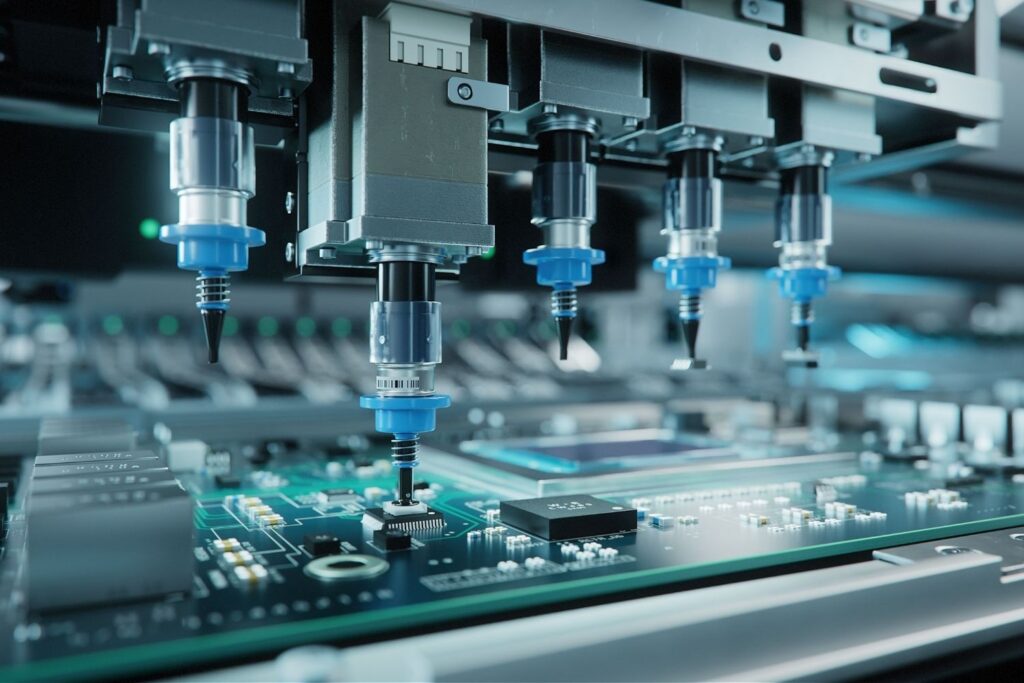
SMT Manufacturing Equipment:
Chip Shooters
High Speed Placement Machines
Ultra Precision Placement Machines
Reflow Ovens
Wave Soldering Machines
Selective Soldering Machines
Solder Paste Printers
Automated Optical Inspection (AOI) Machines
XRay Inspection Systems (XRAY)
3D SPI (Solder Paste Inspection) Systems
Automated Electrical Test Systems (ATE)
Flying Probe Testers
In Circuit Testers (ICT)
Ultrasonic Cleaners
Aqueous Cleaning Systems
Solvent Cleaning Systems
Nitrogen Generators for Oxidation Control
Conveyor Systems
Feeder Systems (for components)
PCB Loaders/Unloaders
Placement Machine Programming Software
CAD/CAM Software for Design and Manufacturing
Data Collection and Analysis Software
Dip Equipment:
Single Wave Soldering Machines
Double Wave Soldering Machines
LeadFree Wave Soldering Machines
Robotic Selective Soldering Systems
Bench top Selective Soldering Units
Manual Dip Soldering Stations
Semi Automatic Wave Soldering Machines
Hot Plate Soldering Equipment
Flux Dispensers
Flux Foam Applicators
Flux Spray Systems
PCB Edge Clamps
Board Indexing Systems
Conveyor Belts for Board Transport
Ultrasonic Cleaning Systems for Through Hole Boards
Brush Cleaning Systems
IPA Vapor Cleaning Systems
Visual Inspection Tools
Multi meters and Continuity Testers
Oscilloscopes for Signal Integrity Testing
Functional Testers for Completed Assemblies
Solder Pots and Bars
Spare Parts for Wave Soldering Machines
Nozzles and Tips for Solder Pots
Desoldering Tools and Braids
This list encompasses the primary equipment typically found at www.v2smt.com, which caters to both SMT and through hole (dip) soldering processes. Each item in this comprehensive guide is pivotal in guaranteeing high quality, efficient, and dependable electronic assembly.
V2SMT Copyright © 2026 All Rights Reserved.
This website uses cookies to improve your experience. We'll assume you're ok with this, but you can opt-out if you wish. Read More
| Name | Domain | Purpose | Expiry | Type |
|---|---|---|---|---|
| wpl_user_preference | v2smt.com | WP GDPR Cookie Consent Preferences. | 1 year | HTTP |
| Name | Domain | Purpose | Expiry | Type |
|---|---|---|---|---|
| sbjs_migrations | v2smt.com | Sourcebuster tracking cookie | 55 years | HTTP |
| sbjs_current_add | v2smt.com | Sourcebuster tracking cookie | 55 years | HTTP |
| sbjs_first_add | v2smt.com | Sourcebuster tracking cookie | 55 years | HTTP |
| sbjs_current | v2smt.com | Sourcebuster tracking cookie | 55 years | HTTP |
| sbjs_first | v2smt.com | Sourcebuster tracking cookie | 55 years | HTTP |
| sbjs_udata | v2smt.com | Sourcebuster tracking cookie | 55 years | HTTP |
| sbjs_session | v2smt.com | SourceBuster Tracking session | Session | HTTP |